
Ballast Water Management System Compliance — 5 Steps to IMO D2 & USCG Approval
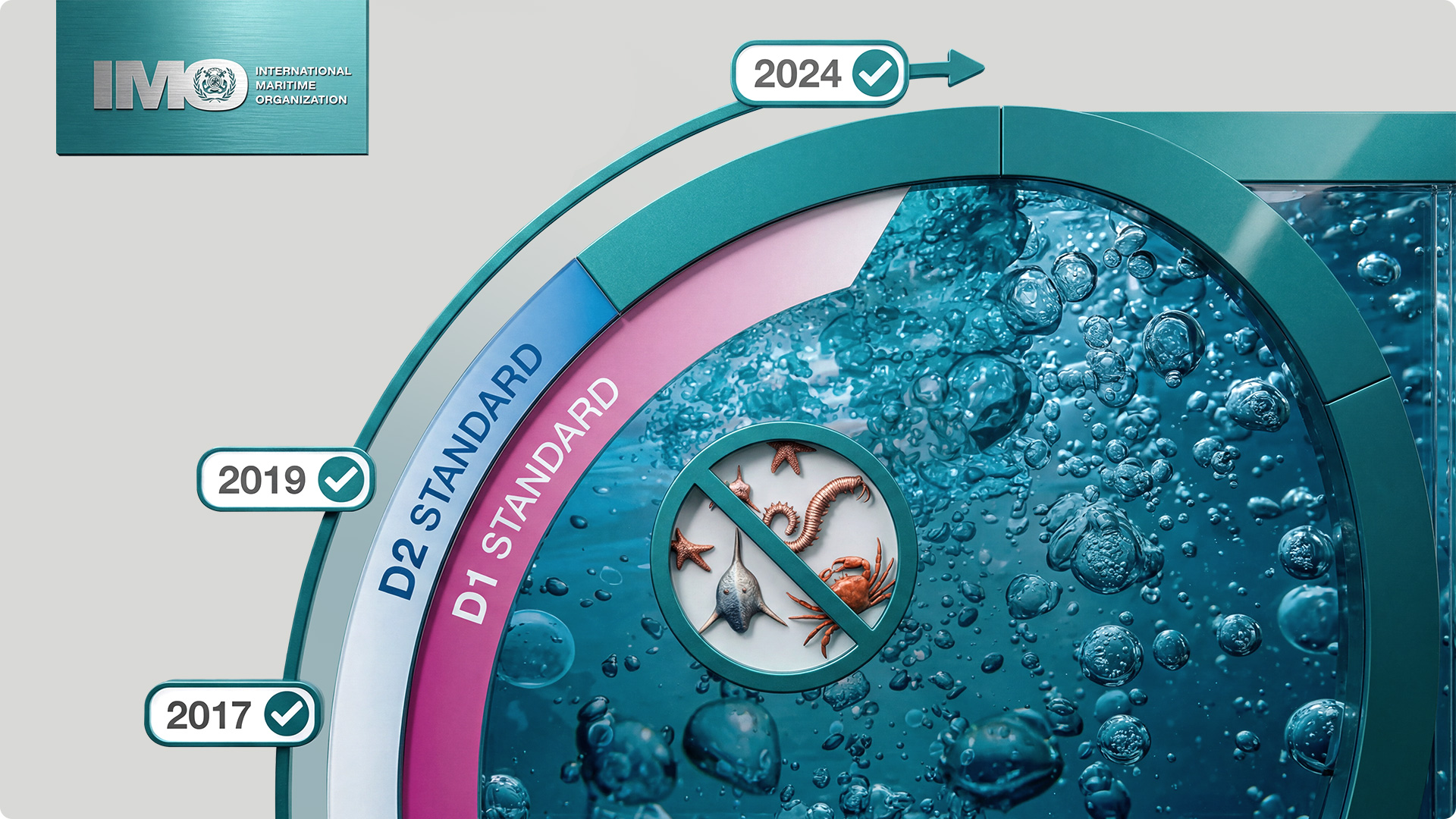
IMO's deadline for all vessels to be equipped with compliant ballast water treatment systems is approaching rapidly. By September 2024 all ships should meet the newest D2 standard. Selecting the right type of ballast water management system (BWMS), getting it installed and commissioned correctly, or retrofitting existing solutions often pose tricky challenges and a lot of specialist work. As Hamworthy we help our customers get their BWMS compliant by walking them through following five steps:
Step 1: Data Collection & BWMS Selection
Obtain the relevant vessel data such as pump capacity, operational profile, class, flag and other pertinent data to allow suitable options to be selected for equipment type, size and scope of supply. If requested we can supply a high level feasibility study outlining the options to the customer at this early stage.
Step 2: Vessel Survey, 3D Scan & Design
Attend vessel to conduct 3D laser scan of the proposed installation site. This enables development of dull mechanical + electrical engineering documents and system installation. Next steps: full planning of tie-ins to existing pipework, avoiding clashes with existing structure/equipment and identifying suitable equipment locations. Design phase can include all required documentation for class plan approval to ease burden on customer and simplifying the process.
Outside of main pipework penetrations, some of this work can be conducted prior to drydock phase to shorten needed drydock time.
Step 3: Procurement & Manufacturing
Transfer of materials into the vessel and installation of the system following the design concept.
Several options: installation by yard with supervision, or by trusted Hamworthy partner. In both cases the installation design plan will be followed. All wiring will be completed, and power taken from a new or existing breaker on the vessel. The system then goes through an installation readiness check, prior to commissioning.
Step 4: Commissioning
Final stage. Carried out on board, by Hamworthy or a trusted partner. Includes dry and wet commissioning, demonstration to class and some crew training on operating and maintaining the system.
Optional: commissioning testing by a laboratory, carried out with required independence and impartiality to give owner confidence in system's performance.
Staying Compliant
With the treatment in use, the vessel can now operate with the knowledge that the ballast water discharge meets all required regulations. To help ship owners and operators remain compliant over the longer term, Hamoworthy is providing full lifecycle support, based on a complete range of services. These will assist owners and operators in maintaining and operating a compliant system. Compliance against certification relies on the system being correctly maintained and having type approved components fitted, according to the OMSM.
What do we offer?
- OEM spares for each Aquarius® system, globally distributed.
- Reagents and consumables for continuous operation, supplied rapidly.
- Service attendance for any repairs that the crew are confident to do themselves.
- Health checks and annual servicing, if required by the vessel operator, where the crew does not wish to carry out the work themselves.
- Remote assistance in case of any operational issues with the system.
Hamworthy has the capability, thanks to a state of the art distribution facility, to deliver any required spares quickly and reliably. In addition, our expert teams are able to remotely assist in diagnising any problems.